
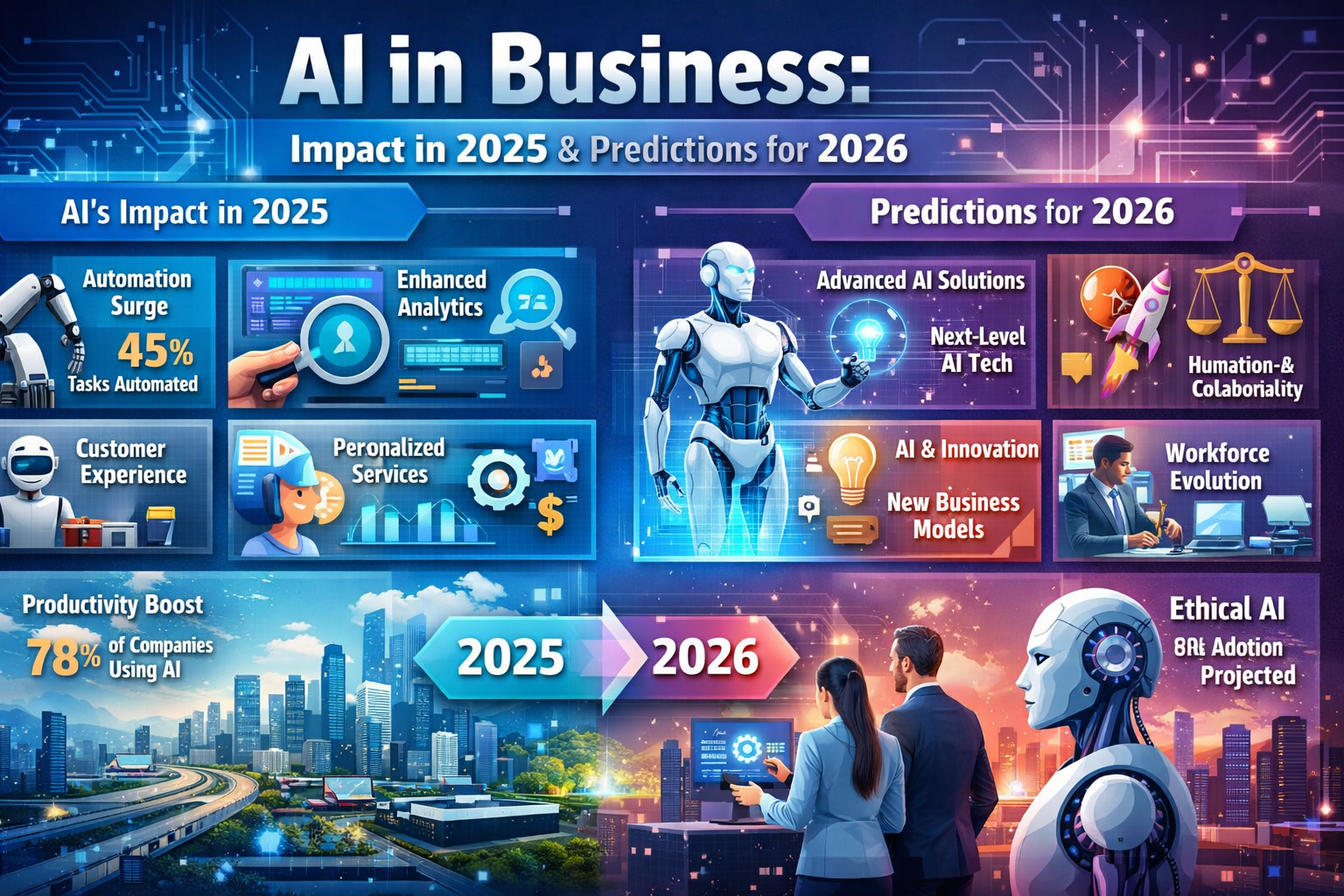
As we settle deeper into 2025, artificial intelligence (AI) continues to reshape the corporate landscape in ways that were unimaginable just a few years ago. From streamlining operations to transforming customer experiences, AI is no longer a futuristic concept—it’s a central component of competitive strategy.
AI in 2025: Current Impact on Companies
- Operational Efficiency: Companies across industries are leveraging AI-driven automation to optimize workflows, reduce costs, and minimize human error. For instance, AI is now managing supply chain logistics in real-time, predicting demand patterns, and ensuring faster response times.
- Enhanced Decision-Making: Data-driven decision-making has reached new heights with AI. Predictive analytics and machine learning models are providing actionable insights, enabling executives to anticipate market trends and adjust strategies proactively.
- Customer Engagement: AI-powered chatbots, virtual assistants, and personalization engines are transforming how businesses interact with customers. Companies are using AI to deliver tailored experiences, increasing satisfaction and loyalty.
- Innovation Acceleration: AI is becoming a core driver of innovation, enabling rapid prototyping, product design, and scenario simulation. Organizations can test new ideas faster, reducing the time from concept to market.
Challenges Companies Face in 2025
Despite its benefits, AI adoption is not without challenges. Ethical considerations, data privacy concerns, and workforce displacement are ongoing issues. Companies must balance AI implementation with responsible governance and upskilling initiatives to mitigate risks.
Looking Ahead: AI in 2026
The AI landscape in 2026 promises even deeper integration and more sophisticated applications:
- AI-First Business Models: More companies will adopt AI as the foundation of their business models, not just as a support tool. AI-driven marketplaces, autonomous operations, and AI-powered services will become commonplace.
- Human-AI Collaboration: The focus will shift from AI replacing humans to augmenting human capabilities. Employees will collaborate with AI systems for complex problem-solving, creativity, and strategic planning.
- Regulatory Clarity: Governments worldwide are expected to introduce more comprehensive AI regulations, providing clearer guidelines for ethical AI use and data governance.
- Advanced Personalization: AI will enable hyper-personalized experiences at scale, with products, services, and marketing tailored to individual preferences in real-time.
- Sustainability and AI: Companies will increasingly use AI to drive sustainability initiatives, from energy optimization to supply chain transparency, contributing to environmental and social governance goals.
Conclusion
The AI revolution is far from over. In 2025, businesses are harnessing AI to enhance efficiency, decision-making, and customer experiences. Looking ahead to 2026, AI will become even more central to business strategy, driving innovation, collaboration, and ethical practices. Companies that embrace AI thoughtfully and strategically will not only survive but thrive in this rapidly evolving landscape.